.avif)
Campus West Aachen 2026: The City's Largest Construction Project Explained
Anyone living or studying at Campus West in Aachen is living next to one of Germany's largest urban development projects. On the site of the former Aachen-West freight yard, directly adjacent to the existing RWTH buildings, a new research district is being developed on 32.5 hectares. Five research clusters, a connecting campus strip, new RWTH institute buildings, spaces for startups and technology companies, around 5,000 new jobs, and a planned total investment of over one billion euros in buildings and infrastructure. That sounds like a distant future. But it's not quite. As of spring 2026, the project has taken a concrete step, and the first building is already planned and designed. This article fully explains the project's status, without exaggeration and without downplaying the limitations.
The Vision for Campus West
The vision is clearly defined. The City of Aachen, RWTH Aachen University, and Campus West GmbH are jointly pursuing the goal of creating a research landscape on the undeveloped area around Aachen West train station, which, according to the city, "sets European standards" and connects science, business, and urban life.
Campus West connects the two existing university sites: Campus Mitte and the Melaten site. The approximately 1.6-kilometer-long "Campus Strip" forms the central development axis, a traffic-calmed route along which further university buildings will be lined up in the future. Five research clusters are planned on an area of approximately 325,000 square meters around Aachen West train station, which are closely linked thematically and spatially with the already existing institutes in Campus Mitte.
In addition to RWTH Aachen University, areas are also designated for companies and startups, which are to be located in direct proximity to the research institutes. The underlying master plan was developed by the Düsseldorf-based firm RKW Architektur+.
What transpired in spring 2026: the renewed public consultation
The project had suffered a setback. The Higher Administrative Court of Münster had declared development plan 923, which the City Council had unanimously approved on June 23, 2021, invalid with its ruling of December 5 (File reference: 7 D 52/22.NE). The court had identified a formal and a substantive error in the development plan.
It is interesting to note who filed the lawsuit: A resident living in an adjacent property had filed a complaint against development plan 923 for Campus West. Additionally, a neighboring chocolate factory, famously Lindt, had also filed a complaint against the plan. At the same time, Campus West GmbH filed a complaint against the development plan for the expansion of the Lindt premises. Both parties indicated their willingness to settle out of court.
The city has rectified the deficiencies. In its last meeting, the planning committee decided on the renewed online publication of development plan no. 923 "Campus West" and additionally on the public display of the plan. The draft of development plan no. 923, including its justification with an environmental report and written stipulations, was published online from Monday, March 30, to Monday, May 4, via the central internet portal of the state of NRW at beteiligung.nrw.de and beteiligung.aachen.de.
This is not a setback, but a necessary step in German planning law. Once the public consultation is completed without significant new objections, the plan can become legally binding and construction can begin.
The First Building: Institute for Ferrous Metallurgy
While the planning process is underway, the first building for Campus West is already concretely planned. The replacement new building for the Institute for Ferrous Metallurgy (IEHK) will be constructed at Campus West. The jury awarded first prize to Henn GmbH from Munich. The new building on Khlwetterstraße marks the architectural inauguration of Campus West.
With a usable area of 5000 square meters, the institute building is not only intended to combine all necessary spaces. It also marks the beginning of the area's development and is situated in a prominent urban location. In addition to office and seminar rooms, laboratories, a test hall, and a lecture hall are planned.
Architecturally remarkable is HENN's design: Fittingly, HENN's office won with a building section designed as a timber-hybrid construction. The IEHK building is thus not only the first above-ground building of the new Campus West but also a demonstration project for sustainable construction in the scientific sector.
HENN's design combines highly diverse functions in a unique typology: quiet office areas, seminar rooms, laboratory and research areas with sensitive technical requirements, as well as application and testing areas for robust forging work and material tests.
What the Unexploded Ordnance Contamination Means
A particularity of the area that must be realistically addressed: The site of the future Campus West is still contaminated with unexploded ordnance from World War II, which must be painstakingly recovered before construction activities can begin.
In practice, this means: There is no firmly communicated date for the start of the civil engineering development of the entire area. Construction can only begin once the development plan is legally binding and the unexploded ordnance clearance is complete. This is a real limitation for the timeline. The project is real and well-funded, but anyone expecting a fixed construction start date will not find one for now.
What that means for the residential area right next to it
For anyone currently living or looking for an apartment on Campus West in Aachen, the development of the adjacent area offers clear structural added value: The location will become more desirable in the long run. More research institutes in the vicinity mean more employees, more infrastructure, and a closer integration of the district with university life. This isn't a promise, but a spatial logic that has already materialized in comparable science districts in Zurich, Munich, and Cambridge.
Anyone who knows the RWTH's current enrollment figures and understands how many students and researchers are already active on Campus West daily, will understand why residential areas near the campus are consistently in such high demand. If you compare the best residential areas for students in Aachen , you'll regularly come to the same conclusion for RWTH students: Campus West is the most convenient everyday location.
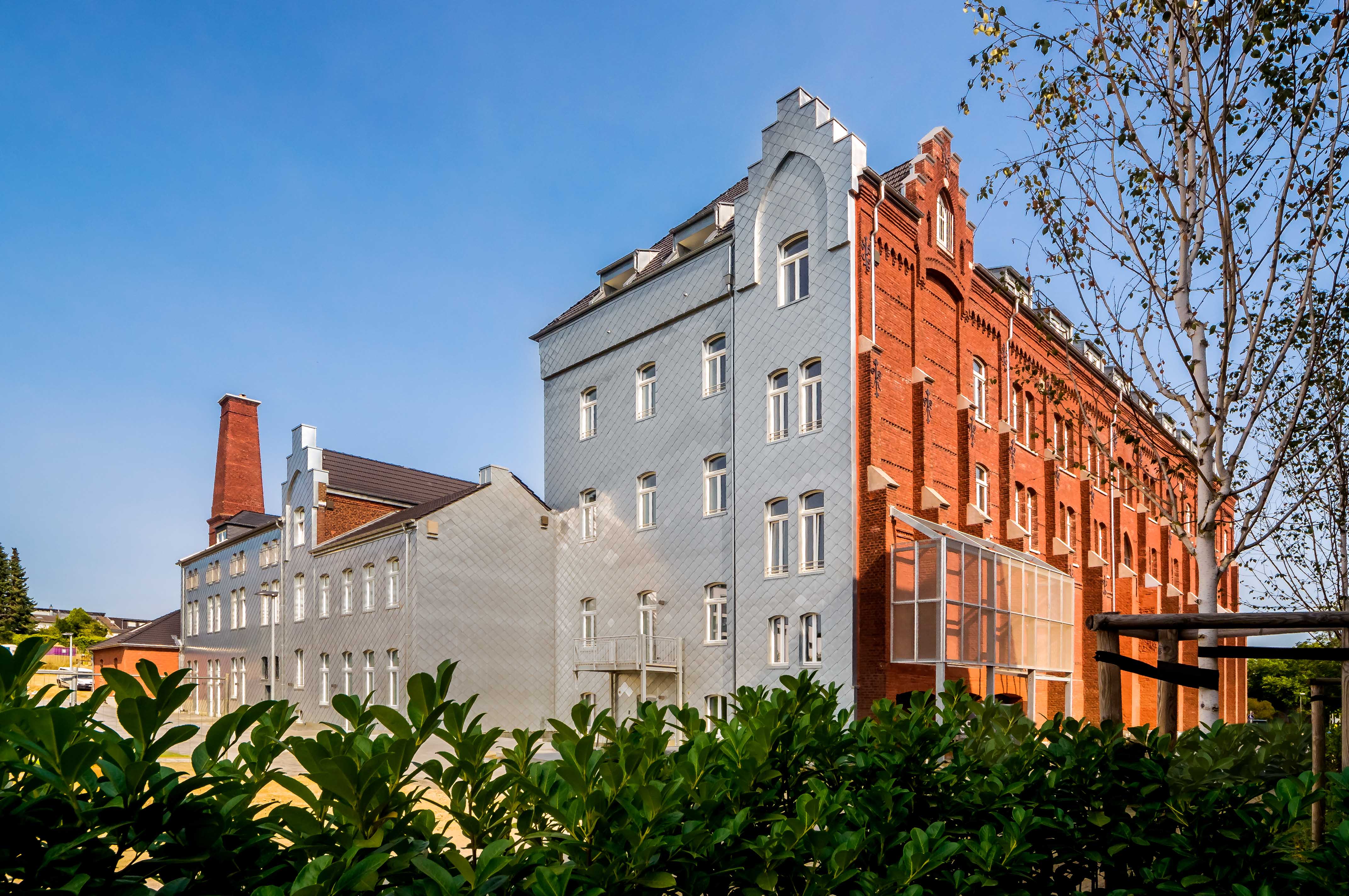
The Guter Hirte residential project is located directly adjacent to this development area. The development plan's rationale specifically includes a cul-de-sac access road from Süsterfeldstraße for the adjacent residential quarter, a clear sign that the planning explicitly considers the existing residential buildings in the neighborhood. More about the location: https://guterhirte-wohnen.com/lage
Conclusion
Campus West is Aachen's largest urban development project, spanning 32.5 hectares, featuring five planned research clusters, approximately 5,000 new jobs, and a total investment of over one billion euros. The revised development plan was once again publicly exhibited from late March to early May 2026; the first building has been planned and designed, but ordnance disposal is still pending before construction can definitively begin. Anyone living in the immediate vicinity today is not only close to RWTH, but also at the very beginning of a district that will visibly transform the city over the coming decades.
If you're looking for a furnished apartment directly in this location: https://guterhirte-wohnen.com/apartment