.avif)
Blocked Account & Proof of Financial Resources for Studying in Aachen: Your Complete Guide

As an international student in Aachen, you must prove to the German authorities that you can support yourself financially. In practice, this is almost always done via a blocked account. This guide explains what a blocked account is, how much money you need to deposit, what alternatives are available, where to apply for your residence permit in Aachen, and how to navigate the bureaucracy with as little stress as possible.
- Proof of financial resources is mandatory: without evidence of sufficient funds, you will not be granted a visa or a residence permit – a blocked account is the most common method.
- The DAAD currently recommends a benchmark of at least €934 per month for living expenses [4] – this equates to approximately €11,208 for 12 months, which you deposit into the blocked account.
- You can only withdraw the released amount each month – the account therefore protects both the authorities and yourself from spending the money too quickly.
- Alternatives to a blocked account include a formal declaration of commitment, a DAAD scholarship, or a recognized maintenance agreement – check which option is right for you [1].
- You apply for a student residence permit under Section 16b of the Residence Act (AufenthG) at the StädteRegion Aachen – and you must do so in good time before your visa expires [7].
What is a blocked account – and why do you need one?
A blocked account is a special type of bank account that serves as proof to the authorities that you have enough money for your stay in Germany. You deposit a specific amount, which is then released in fixed monthly installments. This shows the German embassy or immigration office that you will not fall into financial hardship.
The legal basis for this is found in Section 2 (3) of the Residence Act: anyone wishing to live in Germany must be able to support themselves using their own funds or secured sources [2]. For students, this is specified through the visa requirement and the subsequent residence permit under Section 16b of the Residence Act – both of which require proof of sufficient financial resources [7].
The Federal Foreign Office explicitly points out that a blocked account with a recognized provider is considered standardized proof and is accepted by German missions abroad [3]. An important point that many underestimate: the account must be opened and funded before applying for a visa. You cannot do this once you are already in Germany, so make sure to take care of it early.
How much money needs to be in the blocked account?
The figure you will encounter time and again: the DAAD currently provides a benchmark of around €934 per month for living expenses in Germany [4]. For a full year, this amounts to €11,208, which you deposit as a total sum into the blocked account. You will then be able to withdraw up to this amount each month.
This amount is a guideline for the authorities—it is intended to cover rent, food, health insurance, study materials, and daily needs. It is not automatically identical to what you will actually spend each month. In a city like Aachen with a tight housing market, rent alone can take up a significant portion of this.
Some universities or embassies require higher amounts or additional proof for certain countries of origin. Therefore, always check this directly on the website of the German embassy in your home country before depositing any money. The DAAD also lists the typical expenses involved [5].
Step by step: opening and using a blocked account
The process is clearer than it sounds—once you know how it works, it practically runs itself.
1. Choose a provider: There are several blocked account providers recognized by German authorities. The Federal Foreign Office lists the accepted providers [3]. Compare account maintenance fees and activation times before you make your decision.
2. Open the account online: Most providers allow for a completely digital account opening process. For this, you will need your passport, enrollment documents or your letter of admission, as well as a registered address or mailing address.
3. Deposit funds: Transfer the annual amount (a minimum of €11,208 as a guideline [4]) to the blocked account. The transfer must often originate from abroad or be clearly documented.
4. Obtain the confirmation: The provider will issue an official blocked account confirmation for you to present to the embassy or the immigration office [3].
5. Apply for a visa or residence permit: With this confirmation, you go to the German embassy (for your visa) or later to the StädteRegion Aachen (for your residence permit under Section 16b of the Residence Act) [7].
6. Access your monthly allowance: Once you are in Germany, the provider will release the set amount each month – you transfer it to your German current account and can then use it.
What are the alternatives to a blocked account?
A blocked account is the most common, but not the only way to prove you have sufficient funds to cover your living expenses. Make it in Germany, the official information portal of the German government, lists several recognized alternatives [1]:
Declaration of commitment: A person residing in Germany – for example, parents with a right of residence – provides a written guarantee to cover your living expenses. This document is certified by the local immigration office.
Scholarship: A verified scholarship—such as one from the DAAD, a German foundation, or a recognized international funding organization—can fully replace the proof of financial resources. An official scholarship certificate is required. [5].
Proof of support / Parental guarantee: In some cases, a notarized document confirming that your family will cover your living expenses is sufficient. The accepted format depends on your country of origin and the relevant embassy.
Combination of multiple sources: You do not need to provide proof from a single source. A partial scholarship combined with a partial blocked account is acceptable, provided the total amount meets the required benchmark.
In short: If you do not have a scholarship and no one in Germany who can provide a formal obligation (Verpflichtungserklärung), a blocked account is your simplest and most reliable option.
Document Checklist: What you need for your residence permit in Aachen
When you arrive in Aachen, your visa will typically expire after three to six months. You must then apply for a residence permit under Section 16b (1) of the Residence Act (AufenthG) at the StädteRegion Aachen [7]. RWTH Aachen recommends booking this appointment well in advance, as waiting times may occur [6].
The following checklist summarizes the documents typically required. However, always check the current list directly on the StädteRegion portal, as requirements can change [7]:
DocumentNoteValid passport (+ copy)Must be valid for at least 6 months beyond the application dateCurrent biometric passport photoFormat according to current specifications (35×45 mm)Certificate of enrollmentCurrent certificate from RWTH or FH AachenProof of financial resourcesBlocked account confirmation, scholarship certificate, or formal obligationProof of health insuranceStatutory or recognized private health insuranceRegistration confirmationRegistration at the Aachen Citizens' Office (residence)Completed application formAvailable via the StädteRegion Aachen portal [7]Photo ID from your home country, if applicable (required depending on your country of origin).Book your appointment online via the StädteRegion service portal. Allow for a lead time of at least 4–6 weeks – slots fill up quickly, especially at the start of the semester. Failing to register your residence will stall the entire process. If you do not have a permanent address yet, it is best to read up on what to keep in mind regarding the landlord confirmation form beforehand.
What does it all cost – and how can you plan your budget realistically?
In addition to the blocked account amount itself, there are other costs you should keep in mind. Depending on the provider, opening and maintaining the account involves a one-time fee as well as monthly disbursement fees – for most providers, this is in the low double-digit range per disbursement.
There is also a processing fee for your residence permit. The amount depends on the purpose and duration of your stay, but it is typically around €100 [7]. You may also incur costs for certified translations if you are submitting documents from abroad.
A rough calculation: You deposit €11,208 into the blocked account, from which approximately €934 is released to you each month [4]. You use this to cover rent, utilities, food, public transport, study materials, and leisure expenses. Those who pay an all-inclusive rent – where base rent, heating, utilities, and Wi-Fi are bundled into one monthly sum – can budget much more easily because there are no unexpected additional payments.
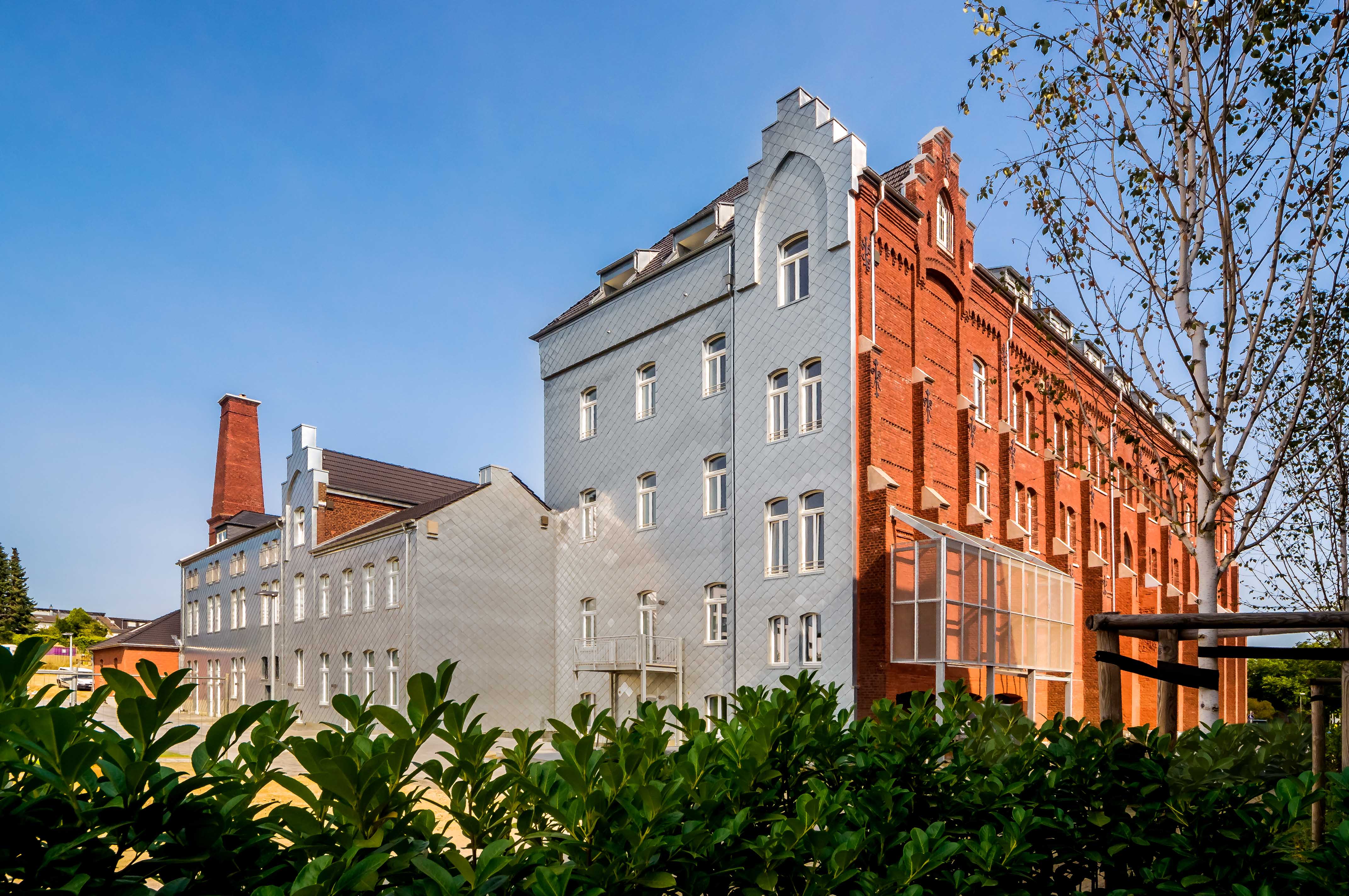
Der Gute Hirte in Aachen-West offers exactly this all-inclusive model: a fixed monthly payment with no utility bill adjustments at the end of the year. Especially when your budget is strictly capped by the blocked account, this is a real advantage. You can find current prices on the apartment page. You can learn more about utilities and deposit rules in Aachen in general in the article Utilities & Deposit in Aachen.
Common mistakes – and how to avoid them from the start
A few clear tips can be derived from the typical pitfalls international students face – so that these don't happen to you:
Starting too late: The blocked account must be opened and funded before applying for your visa. If you try to do this after arriving in the country, you will already have a problem. Allow at least 4–8 weeks for account opening, the transfer of funds, and the issuance of the confirmation certificate.
Depositing the wrong amount: Some embassies require more than the DAAD standard amount or have country-specific requirements. Always check the website of the relevant German embassy in your home country before you transfer any funds.
Submitted an outdated certificate: Blocked account certificates have an issue date. Many authorities only accept certificates that are less than three months old. Make sure to request a fresh one shortly before your appointment.
Forgot to register your residence: Without registering at the citizens' office (Bürgeramt), you won't receive a registration certificate—and without that certificate, your application for a residence permit will be unsuccessful. The City of Aachen's service portal explains the process [9]. You can find the complete step-by-step process in the article Registering your residence at the Aachen citizens' office.
Failed to provide proof of health insurance: Your application is incomplete without valid proof of health insurance. The article Health insurance for international students in Aachen explains everything you need to know as an international student in detail.
Booked your appointment too late: Especially at the start of the winter semester, appointments with the regional authority (StädteRegion) fill up quickly. Book your appointment online as soon as you know your arrival date—don't wait until your visa is about to expire.
Frequently asked questions
Can I close my blocked account after I finish my studies?
Yes, you can close the blocked account as soon as you no longer need it for visa or residence purposes. This is typically the case when you permanently end your stay in Germany or have received a different residence permit that no longer requires a blocked account. You can request the closure directly from your account provider, and the remaining balance will be paid out to you. The Federal Foreign Office recommends waiting to close the account until your new residence status is confirmed [3].
Is a scholarship sufficient instead of a blocked account?
Yes, a recognized scholarship can fully replace a blocked account, provided it covers the required cost of living. You will need an official scholarship certificate that clearly states the monthly amount, the duration, and the issuing organization [1]. DAAD scholarships, for example, are readily accepted by German authorities [5]. Whether another scholarship is sufficient is decided on a case-by-case basis by the relevant embassy or immigration office.
How long does it take to get a residence permit issued in Aachen?
Expect a processing time of several weeks; it can take even longer at the start of the semester. The Aachen city region processes applications under Section 16b of the Residence Act [7], and RWTH recommends booking your appointment as early as possible [6]. Important: As long as your application was submitted on time and your visa was still valid at the time of submission, you are legally allowed to stay in Germany, even if your residence card has not yet arrived. For peace of mind, obtain written confirmation of receipt from the office.
What happens if I spend less in a month—does the money in the blocked account expire?
No, the money does not expire. If you withdraw less than the released amount in a given month, the remainder stays in the account. Many providers allow you to carry over unwithdrawn monthly amounts to the following month or have the remaining balance paid out at the end of the term. Check your provider's specific terms and conditions beforehand—this is a point many people overlook.
View apartments at Guten Hirten
Sources
- Make it in Germany: Securing your livelihood based on purpose of stay
- Section 2 Residence Act – Definitions / Livelihood
- Federal Foreign Office: Opening and closing a blocked account
- DAAD: Education and living costs
- DAAD Study in Germany: Financing
- RWTH Aachen: Residence Permit
- StädteRegion Aachen: Residence Permit for Students (Section 16b (1) Residence Act)
- FH Aachen: Information for International Students
- City of Aachen Service Portal: Registering Your Residence
- City of Aachen: Studying in Aachen