.avif)
Broadcasting contribution for students in Aachen: how to register & apply for an exemption

As soon as you move into your own apartment in Aachen, you are automatically required to pay the broadcasting fee, regardless of whether you listen to the radio or not. The fee is tied to the apartment, not to the individual or the devices. If you receive BAföG, you can usually be exempted; everyone else pays once per apartment, so splitting the cost is worth it even in a shared flat. This article shows you step-by-step how to register, when an exemption is possible, and which deadlines you need to keep an eye on.
- The broadcasting fee is tied to the apartment, not to you as an individual; a shared flat only pays it once[1].
- Registration is done online via the contribution service, at the latest when you move into your own apartment[3].
- BAföG recipients can apply for an exemption; proof is provided via the BAföG notification[4][5].
- An exemption does not apply indefinitely in retrospect; it is valid from the date of application or up to a maximum of three years retroactively with proof[4].
- When moving, you must update your address with the contribution service within a short time, otherwise you may face payment reminders[6].
- Shared flats should agree internally on who will be registered as the fee payer to avoid double payments[1].
- Payment is conveniently handled via direct debit or bank transfer, with quarterly payments being the standard.[8].
What is the broadcasting contribution and why does it affect you as a student?
The broadcasting contribution funds public service broadcasters like ARD, ZDF, and Deutschlandradio. It is charged per household, regardless of how many people live there or whether you even own a radio or television.[1]. In practical terms, this means that as soon as you move into your own apartment or a shared room in Aachen and register your residence, you are automatically liable for the contribution, regardless of your actual usage. This comes as a surprise to many first-year students, especially if they previously lived with their parents and never had to deal with the issue directly.
It is important to know that the obligation does not begin when you register with the contribution service, but rather the moment you actually move into the apartment.[7]. Registering is therefore more of a formal acknowledgment of a status that already exists. If you ignore this, you risk having to pay backdated fees once the contribution service becomes aware of your new address through data matching with the residents' registration office. Especially when registering your new address in Aachen, for example when you visit the Aachen Citizens' Office to register as a new resident, you should keep the broadcasting contribution in mind.
How do you register with the contribution service?
Registration is handled entirely online via the contribution service's form and usually takes only a few minutes.[3]. You will need your full name, your new address in Aachen, your move-in date, and, if applicable, your contribution number from a previous residence. If you are setting up your own household for the first time, you will be assigned a new contribution number after registering, which you should keep for all future correspondence.
In shared apartments, the question often arises as to who needs to register. Since the contribution is charged per household, it is sufficient for one person in the shared apartment to register as the payer.[1]It is best to discuss this as soon as you move in so that multiple roommates don't register independently, which could lead to confusion or even duplicate notices. If you are renting a furnished apartment where utilities are charged at a flat rate, you should still check whether the broadcasting fee is handled separately. This depends on your rental agreement and should be considered independently of any "all-inclusive" rent.
If you are moving to Aachen from abroad and do not yet have a German bank account, you can still register. However, you should only set up the payment once your account is ready. You can find more information on how to open an account in Aachen in our article on opening a bank account in Aachen.
Who is eligible for a student exemption?
Not every student automatically pays the full fee. If you receive BAföG, you can apply for an exemption[4][5]. The basis for this is usually your current BAföG notification, which you submit to the contribution service along with your exemption application. An exemption is not an automatic result of receiving BAföG; you must actively apply for it, ideally as soon as you have your notification in hand.
Those receiving social benefits such as citizen's allowance (Bürgergeld) or basic security (Grundsicherung) may also be eligible for an exemption under certain conditions[5]. For most students in Aachen, however, the BAföG notification is the relevant proof. The timing is important: the exemption generally applies from the month in which the application is submitted; retroactive exemption is only possible within narrow limits and with appropriate proof[4]. Therefore, if you realize late in the semester that you were eligible, you may lose out on months you have already paid for.
Students who are not eligible for BAföG—for example, because their parents' income is too high or because they are financing a full-time degree without support—are generally not entitled to an exemption and must pay the regular fee. This affects many international students who are often financed via a blocked account or scholarships. If you want to know more about financing your studies, it is worth taking a look at our articles on blocked accounts and proof of financial resources or BAföG in Aachen.
What documents do you need for registration and exemption?
To save you from filling out forms twice, it’s worth taking a quick look at which documents you need for each step. The following table summarizes the most important documents you should have ready when registering or applying for an exemption.
StepRequired documentsRegistering your apartmentName, address, move-in date, and existing contribution number (if applicable)[3]Exemption application with BAföGCurrent BAföG notification, completed exemption form[4][5]Exemption application with social benefitsApproval notice for the respective benefit[5]Change of address for moves within AachenNew address, contribution number, move-in date[6]Setting up paymentBank details for direct debit or transfer information[8]It is best to keep your documents ready in digital PDF format, as the contribution service primarily accepts forms online. If you do not have your BAföG notification yet, you should not delay your registration. You can simply submit the exemption application later as soon as the notification arrives.
What do you need to keep in mind when moving within Aachen?
If you move within Aachen during your studies, for example from a student dormitory to a shared apartment or from a shared apartment to your own place, you must notify the contribution service[6]. Updating your address is important so that notifications and payment requests continue to reach you, ensuring you don't accidentally end up in a dunning process just because mail was sent to your old address. You can make the change online via your contribution account; you will need your contribution number and your new address.
Especially when moving from a shared apartment to your own place, you should check whether you were registered as the contribution payer in the old apartment. If so, either a roommate must take over the role, or the apartment must be deregistered entirely if no one else lives there. If you have an existing exemption, you must also have it confirmed for your new address; it does not automatically transfer.
For international students who move frequently or commute between Aachen and their home country, it is particularly important to note that reporting to the contribution service is independent of registering with the residents' registration office. While both offices do exchange data, this can take several weeks, which is why you should keep an eye on both registrations yourself. If you have just moved to Aachen and have general questions about changing your registration, you can find background information in the article Registering your residence in Aachen.
How do you pay the broadcasting contribution, and what happens if you miss a payment?
The broadcasting contribution is generally due quarterly, but you can also pay monthly, semi-annually, or annually if you submit a request to do so[8]. Setting up a SEPA direct debit mandate is the easiest way to avoid having to keep track of due dates manually. Especially during the busy daily life of a student, this is a sensible solution to avoid the risk of late fees.
Anyone who fails to pay the contribution—perhaps because an exemption request hasn't been processed yet or simply because it was forgotten—risks receiving payment reminders and, in the worst-case scenario, enforcement proceedings. If you receive a payment notice even though you should be exempt, it is worth filing an objection quickly along with the relevant proof. Usually, your BAföG notification or confirmation of social benefits is sufficient for this[4]. If you respond promptly, the matter can usually be resolved without any complications.
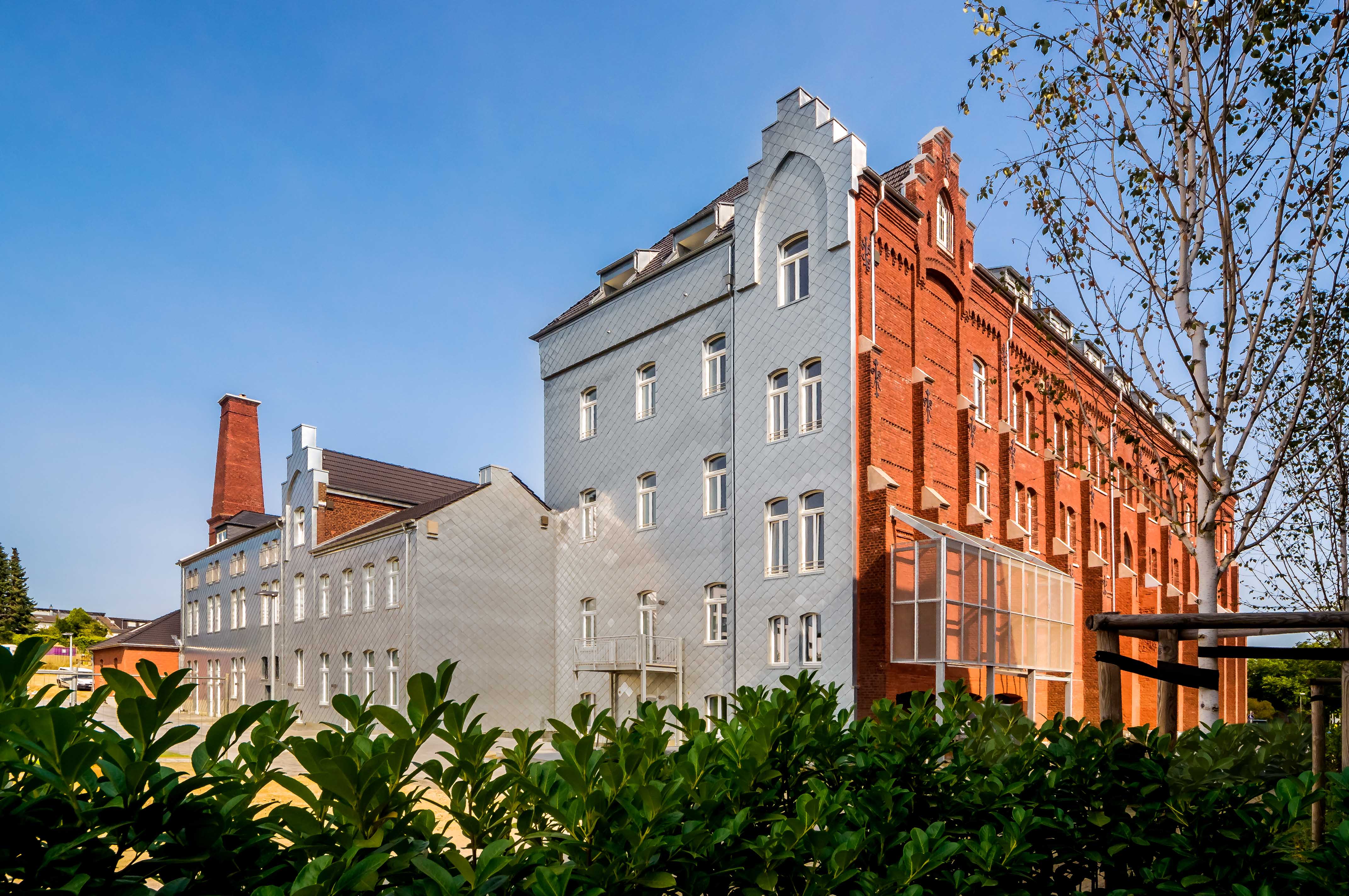
If you live in a furnished apartment where utilities are covered by a flat-rate fee included in your rent, it is worth checking your lease: the broadcasting contribution is typically not part of the flat-rate utility fee and is handled separately through the contribution service. With an all-inclusive rent, such as that offered at the Guten Hirten in Aachen-West, heating, utility flat rates, and Wi-Fi are included, but the broadcasting contribution remains a separate payment that you must manage yourself. You can find the current prices for the apartments on the apartment page.
Frequently Asked Questions
Do I have to pay the full broadcasting contribution as a student in a shared apartment?
No, the contribution is only charged once per household, regardless of how many people are registered there. In a shared apartment, it is sufficient for one person to be registered as the contributor, and you can split the costs among yourselves[1].
How long does it take to get an exemption from the broadcasting contribution with a BAföG notification?
Processing takes a few weeks depending on the volume of applications, but the exemption generally applies from the month the application is submitted. Retroactive exemption is only possible to a limited extent, so you should submit your application as soon as you receive your BAföG notification[4].
What happens if I forget to register with the contribution service?
You are still liable for the contribution, as the obligation begins the moment you move into the apartment, not when you register[7]. The contribution service regularly cross-references registration data and can also retroactively require you to pay.
Can I be exempted if I do not receive BAföG?
No, without BAföG or a comparable social benefit, there is generally no entitlement to an exemption. Exceptions apply, for example, to recipients of citizen's allowance (Bürgergeld) or basic security who can provide a corresponding notice of approval.[5].
Do I have to re-register for the broadcasting contribution if I move within Aachen?
Yes, you must notify the contribution service of your new address so that notices continue to reach you. This also applies if you are only moving to a different shared apartment or unit within Aachen.[6].
View apartments at the Good Shepherd
Sources
- Contribution Service – Information for students
- Contribution Service – New summer semester: What students and trainees should know
- Contribution Service – Registering your apartment
- Contribution Service – Frequently asked questions about exemptions and reductions
- Contribution Service – Recipients of social benefits
- Contribution Service – What do you need to keep in mind when moving?
- Contribution Service – Start and end of the contribution obligation
- Contribution Service – Paying the broadcasting contribution